Will We Act Soon Enough to Save Vulnerable Coastal Cities?
Dear Partners in Green,
If we do not act quickly to convert to renewable energy, to reduce or eliminate our dependence on fossil fuel, to curb a propensity for over-consumption of beef, the production of which has been responsible for the death of rain forests, and we continue our addiction to “throw away” synthetic clothing, there may be little hope that our children, grandchildren, and great-grandchildren, will be living in the same world we now inhabit.
Climate Change is a world issue, but “first-world” countries bear most of the responsibility for climate degradation, and first-world countries have the opportunity and the means to develop targeted strategies to speed up the transition to renewable resources such as wind, solar, and hydroelectric power.
Europe is the fastest-warming continent, with temperatures rising roughly twice the global average. And two top climate monitoring organizations have warned of the consequences for the economy, for human health, and for glacier melt.
According to the U.N.’s World Meteorological Organization and the European Union’s climate agency Copernicus, unlike many countries in Africa, the European continent has the opportunity to develop targeted strategies to speed up the transition to renewable resources like wind, solar, and hydroelectric power in response to the effects of Climate Change.
But will change come in time to save Venice, Milan, Antwerp, Hanover, and Lille, which, according to the Cross Dependency Initiative (XDI)*, are considered to be the most vulnerable cities in Europe.
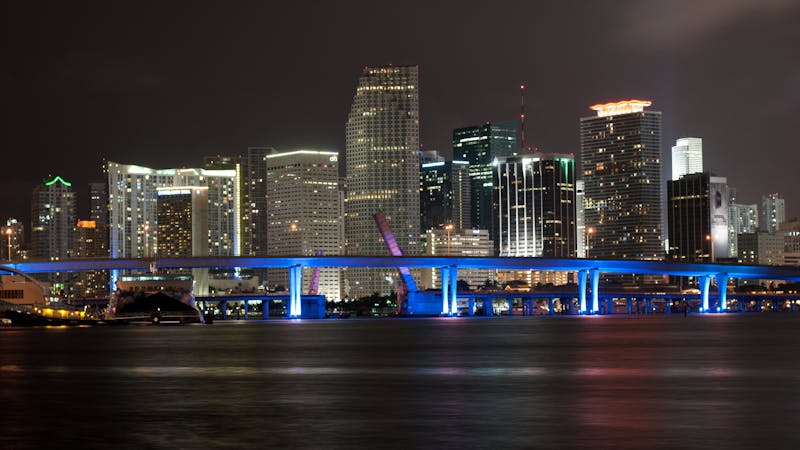
If you are planning overseas or domestic travel, flying or driving, find a way to offset your carbon footprint, and certainly, we should all be taking photos for posterity: Venice, Amsterdam, The Rivera, Virginia Beach, Miami, New Orleans. Future generations will be amazed at how beautiful they were.
I am once again reminded of the The Dissolution of Middle Ages by Gordon Leff, a renowned historian who wrote on Medievalism. p. 147
The Later Middle Ages: a warning or a harvest?
Great and fundamental changes of outlook do not come in an instant.
The dissolution of the medieval outlook was the work of centuries. But it was nonetheless revolutionary and far-reaching.
There is a time-lag that enables people to continue to live with discontinuities long after they have occurred.
It is due to the principle of inertia which is as strong in human society as in nature; but in society it has the added element of will, in wanting to continue in the same attitudes, often long after they become intellectually untenable or practically inconsistent.
Only when they become so irreconcilable that they contradict the very ends they are supposed to serve are they usually abandoned, and then not without a struggle, and a rearguard action extending in some cases over centuries.
Thank you for being on this journey.
Wishing peace and health to you and your loved ones.
Till next time,
Beth
*XDI quantifies the cost of extreme weather and climate change impacts on physical assets to empower decision-makers and asset owners to manage these impacts and identify opportunities for adaptation.